




















No products in the basket.
Asia-South East Cannabis Seeds
Active filters
Breeders
Price
£ -
Seed Type
Stock Availability
Available As Single
Most Popular Seeds
On Sale
Flowering Period Type
Indica / Sativa
Cannabinoid Profile
Environment
Strength
Yield
Indoor Height
Experience Required
Hardiness
Strain Type
Medical Strains
Cup Winner
Indoor Flowering Time
Outdoor Harvest Time
Smell / Taste

Southeast Asian landrace cannabis is some of the oldest, purest sativa genetics on the planet.
These strains of seeds come from Thailand, Laos, Cambodia, Vietnam, and Indonesia, where they've spent centuries adapting to hot, humid tropical weather.
They're tall, slender plants with narrow leaves and long flowering times, classic equatorial sativas that evolved in isolation, shaped by nature and generations of local growers.
Read MoreWhere these strains come from
These landraces grew up around the Bay of Bengal and the Mekong River, especially in northern Thailand, Laos, and parts of Indonesia.
Seeds probably arrived from Central Asia somewhere between 500 and 2,000 years ago, carried along old merchant routes.
Once they landed, local farmers took over, picking the best plants season after season, letting them adapt to the local soil, rain, and heat.
Over time, that process created distinct regional strains: Thai Stick from the Isan highlands, Luang Prabang (sometimes called Lao Sativa) from northern Laos, Aceh from Indonesia's Aceh region, and Cambodian varieties from the southwest mountains.
Each one's a bit different, but they all share that pure sativa backbone, no modern crosses, just open pollination and natural selection doing their thing for generations.
Because trade was so active around the Bay of Bengal, a lot of these landraces aren't quite as "pure" as you might think.
They've been swapping genes with each other and with genetics from eastern India and Indonesia for centuries.
So when you see a Thai or Lao landrace, it's often a natural hybrid of two or more older lines. That's not a bad thing, it's what gave these strains their richness and variety.
Some Thai and Lao plants even picked up a bit of East Asian hemp DNA near the Burmese border. It's all part of the story.
What they look and smell like
They're tall, sometimes hitting three metres, with loads of side branches, long gaps between nodes, and those signature narrow, serrated leaves spiralling loosely up the stem. Thai plants are especially lanky, growing in a cone shape with plenty of branching.
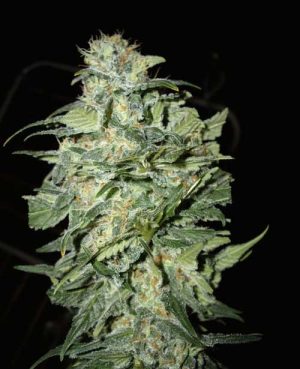
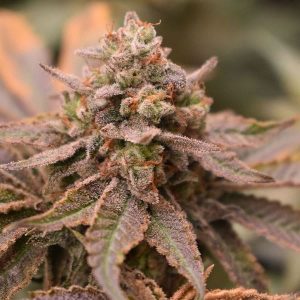
Aceh stays a bit more compact but still stretches, with small minty-green buds covered in orange hairs and a coat of white trichomes.
Cambodian plants often have a whitish sheen on the flowers, and Chocolate Thai, a famous phenotype, produces slender buds with an unusual medium-to-dark brown colour, thanks to traditional curing methods.
Flowering takes a while. That's what happens when a plant evolves under long equatorial days and steady heat.
Luang Prabang has medium-length internodes and pale green colouring, while Thai Stick was prized for its seedless, sticky buds with a light green or golden hue.
As for smell, these strains are proper aromatic. Aceh brings earthy, lemony, mango notes. Thai varieties lean into spice and fruit, driven by terpenes like caryophyllene and terpinene.
Cambodian flowers smell floral and skunky, and Luang Prabang can go fruity, spicy, earthy, sour, or piney depending on the plant.
Chocolate Thai is in a league of its own, coffee, cocoa, spice, and herbs all rolled into one.
The aromas are shaped by their environment: tropical lowlands tend to bring out sweeter, fruitier profiles, while mountainous areas push things earthier and spicier.
Potency and how they spread around the world
Don't let the old-school vibes fool you, these landraces pack a punch. Back in the early 1970s, Lao and Isan sativas were testing at least 17 per cent THC, and some Cambodian plants have hit 30 per cent in rare cases.
Even Aceh, which sits around 10 per cent THC, delivers surprisingly strong results, proof that there's more to potency than just one number. Lamb's Bread, a Caribbean strain with Southeast Asian roots, comes in near 19 per cent.
These sativas are mostly stronger than landrace indicas because local growers spent generations selecting the best plants for seedless flower production, not hash.
Thai cannabis really took off internationally during the Vietnam War. American soldiers and hippie travellers on the so-called Hippie Trail brought back seeds by the tonne, and Thai Stick, originally just premium highland bud tied to bamboo sticks, became legendary.
That era kicked off a wave of globalisation for Southeast Asian genetics, turning them into some of the most widely travelled cannabis strains in history. The process started centuries ago during the Age of Sail, but the 1960s and '70s supercharged it.
Their mark on modern cannabis
If you take any popular strain, there's a decent chance it's got Southeast Asian landrace DNA somewhere in the family tree. OG Kush traces back to Thai genetics mixed with Northern California and Hindu Kush lines.
Girl Scout Cookies comes through OG Kush, so it's got that Thai ancestry too. Legendary breeders like Shantibaba, Nevil Schoenmakers, DJ Short, and Franco Loja travelled through Asia in the '70s and '80s, hunting down landrace seeds to build classics like Amnesia, Haze, Northern Lights, and Skunk.
Colombian Gold, another landrace, became a parent to Skunk #1, which then influenced Cheese and a whole bunch of other strains.
Even newer hype varieties like Cookies, Runtz, and Gelato can be traced back to these foundational genetics.
Most of the best Southeast Asian landraces are actually natural hybrids themselves. Centuries of trade and open pollination around the Bay of Bengal mixed Thai, Lao, Indonesian, and eastern Indian genetics into a rich, diverse gene pool. That's the palette modern breeders keep dipping into.
Keeping them alive
Authentic Southeast Asian landraces are in real danger. Modern indica-sativa hybrids have been flooding into Cambodia and Thailand, pushed by growers chasing faster harvests and bigger yields.
That's a problem because these old strains represent an irreplaceable slice of cannabis biodiversity.
Traditional farming communities in places like Laos and Isan still grow them, they call their best plants 'pan basom' in the local language, but they're struggling economically even as global demand grows.
Grassroots groups like the Indian Landrace Exchange are working with indigenous farmers and seed collectors to preserve authentic genetics and support the communities that've kept them going for generations. It's not easy.
Natural genetic drift from cross-breeding and inbreeding can weaken the original traits, and climate change, tourism, and infrastructure development are all putting pressure on traditional regions.
Asia-South East Frequently Asked Questions
It's a pure cannabis variety that evolved naturally in a specific tropical region over centuries without deliberate crossbreeding, shaped by local climate and farmer selection.
Thailand, Laos, Cambodia, Vietnam, and Indonesia all have their own distinct landraces, each adapted to local conditions and shaped by generations of traditional cultivation.
Soldiers and travellers brought seeds back during the Vietnam War era and the Hippie Trail days, and later breeders travelled to Asia specifically to source authentic landrace genetics.
It was premium seedless highland cannabis from northeastern Thailand, tied to bamboo sticks and incredibly potent, gaining worldwide popularity during the Vietnam War and influencing countless modern hybrids.
Early Lao and Thai sativas tested around 17 per cent THC or higher, some Cambodian plants hit 30 per cent, and even lower-THC strains like Aceh deliver surprisingly powerful results.
They're tall, branchy, and narrow-leafed with long flowering times, while indicas stay compact and finish faster. sativas also tend to be more potent due to selective breeding for seedless flowers.
Thai strains are spicy and fruity, Aceh brings earthy lemon and mango, Cambodian is floral and skunky, and Chocolate Thai smells like coffee and cocoa with herbs and spice.
OG Kush, Girl Scout Cookies, Amnesia, Haze, Northern Lights, Skunk, Cheese, and loads of newer hype strains all trace back to Thai, Lao, or other Southeast Asian genetics.
Modern hybrids are replacing them, traditional growing regions face development and climate pressure, and they don't adapt well outside their native environments, making preservation difficult.
Centuries of trade around the Bay of Bengal mixed Thai, Lao, Indonesian, and Indian genetics, creating natural hybrids and the rich diversity we see in Southeast Asian landraces today.