
























No products in the basket.
Central America and Caribbean Cannabis Seeds
Active filters
Breeders
Price
£ -
Seed Type
Stock Availability
Available As Single
Most Popular Seeds
On Sale
Flowering Period Type
Indica / Sativa
Cannabinoid Profile
Environment
Strength
Yield
Indoor Height
Experience Required
Hardiness
Strain Type
Medical Strains
Cup Winner
Indoor Flowering Time
Outdoor Harvest Time
Smell / Taste

Central America and the Caribbean gave the world some of the purest sativa strains you can find. These landraces, Acapulco Gold from Mexico, Colombian Gold from the high Sierra Nevada mountains, Panama Red, and Lamb's Bread from Jamaica, grew wild and adapted naturally over hundreds of years.
European sailors brought cannabis to the region in the 1500s, and African seeds arrived in 1545.
Later, Indian varieties made their way to Jamaica with workers who came to tend the sugar and cotton fields between 1845 and the late 1800s.
Today, these old-school genetics sit at the heart of loads of modern strains, and collectors still prize them for their purity and history.
Read MoreHow cannabis reached the caribbean and central america
Cannabis first appeared in the Afghan Hindu Kush mountains, then spread around the globe as people moved and traded. In the 1500s, European colonists carried it across the Atlantic and planted it all over the Caribbean and Central America. They needed it for rope, animal feed, and oils, practical stuff.
African seeds arrived in 1545 with the earliest colonial ships, and those plants settled in and adapted to the tropical heat and rain.
Jamaica's story is a bit more layered. African genetics came first, then Indian indica varieties arrived with workers from the East Indies who managed the sugar and cotton fields from 1845 onwards. That's why the Sanskrit word 'ganja' stuck in Caribbean culture.
By the mid-1900s, distinct strains had taken shape across Mexico, Central America, Colombia, and Panama. Mexican landraces leaned heavily sativa, Acapulco Gold, Oaxacan Highland, and Michoacán Brown became the most famous.
Colombian landraces grew in two very different places: the wet Atlantic coast near Panama and the brutal, isolated Sierra Nevada de Santa Marta mountains, which climb above 18,000 feet and produced the legendary Colombian Gold.
Panama Red popped up in the 1960s as a reddish, high-quality strain, probably descended from Colombian or other South American sativas.
During the 1960s and 70s, these landraces made their way to North America through smuggling networks and soldiers returning home with seeds. Those seeds became the backbone of modern hybrid breeding.
What these landraces look like
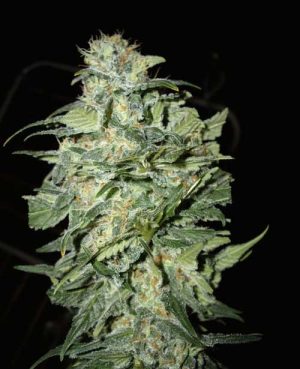
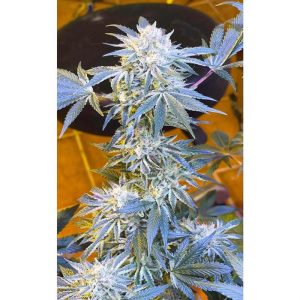
Central American and Caribbean landraces are almost all pure sativa. They grow tall with long, slender buds, narrow leaves, and plenty of side branches.
That shape helped them breathe in the humid tropics, longer stems and narrow leaves let air move through, and the gaps between nodes are wider than in indica plants from cooler places.
Mexican landraces are 100% sativa, evolved naturally in Mexico's unique ecosystems. Jamaican strains, with their Indian roots, tend to finish a bit quicker than pure equatorial varieties.
Colombian landraces have a cone shape, loads of side branches, big gaps between nodes, and vigorous growth, classic sativa traits that worked whether they were on a wet coast or high in the mountains.
These sativas can hit three metres tall, with a sturdy central stem and medium-sized leaves split into seven to ten leaflets.
That structure let them soak up sun in warm, dry equatorial spots, and their long flowering periods gave them time to mature fully under extended tropical daylight.
Acapulco Gold is famous for its golden-brown nuggets and bright orange hairs, while Panama Red got its name from the fiery red pistils covering dark green buds.
These features are the result of centuries of natural adaptation to specific places and climates. The plants thrived in their native habitats.
Aromas, flavours, and what makes them smell that way
Central American and Caribbean landraces pack higher levels of caryophyllene and limonene terpenes, which give them that distinctive peppery and lemony smell.
Acapulco Gold's terpene mix includes caryophyllene, limonene, myrcene, pinene, and terpinolene, so there’s complex aromas, pepper, lemon, musk, mango, pine, and wood.
Plus flavours of spicy honey, coffee, and herbal notes with a burnt toffee edge. Colombian Gold smells skunky and sweet, while Jamaican strains, thanks to their Indian heritage, can be sweet and herbal.
These rich terpene profiles are what set landraces apart from modern hybrids.
The unique smells and flavours come from untouched genetics and natural evolution in distinct ecosystems.
Loads of the pungent aromas that disappeared from modern gene pools during prohibition are still alive in these original varieties, giving breeders access to traits that can't be found anywhere else.
Acapulco Gold has a really unique aroma that stands out from other hybrids, and Panama Red and Colombian Gold each have their own signature scents shaped by centuries of local terroir.
These diverse terpene profiles and complex flavours represent genetic wealth built up over thousands of years, impossible to recreate through modern breeding alone.
The genetic roots of modern strains
Most commercial cannabis strains today trace their genetics back to ancient landraces, and Central American and Caribbean varieties are foundational.
In the late 1950s and early 1970s, hippies travelling the Hippie Trail brought landrace seeds from Central America, South America, Afghanistan, and Nepal back to the West and started crossing them.
Legendary hybrids like Skunk #1 and Haze came from those experiments, Skunk #1 mixed Afghan indica, Mexican sativa, and Colombian Gold, while some of the first Haze breeding stock in California reportedly included Oaxacan Gold.
Colombian Gold was a parent for Skunk #1, which later helped create popular modern strains like Cheese. Haze, made with Colombian landrace genetics, led to strains as potent as Original Amnesia.
OG Kush descends from a mix of landraces from Northern California, Thailand, and the Hindu Kush, and GSC (Girl Scout Cookies) is bred from OG Kush and Durban Poison, a pure sativa landrace from South Africa.
Early North American growers cultivated Mexican and Colombian landrace genetics on US soil from seeds found in imported brick weed, and Hawaiian cultivars like Maui Wowie and Kona Gold developed from Central American and Southeast Asian landrace genetics stabilised on Hawaiian soil during the 1970s.
Today, original seed companies like Dutch Passion still keep collections of pure, unadulterated landrace seeds, preserving these genetic reservoirs for future breeding.
Central America and Caribbean Frequently Asked Questions
A landrace is a strain that evolved naturally in its native environment without being crossed with other varieties, adapting over centuries to local climate, soil, and conditions through natural selection and traditional farming.
Acapulco Gold from Mexico, Colombian Gold from the Sierra Nevada mountains, Panama Red from Panama, and Lamb's Bread from Jamaica are the big names, along with Oaxacan Highland and Michoacán Brown from Mexico.
European colonists brought it in the 1500s for rope, feed, and oils. African seeds arrived in 1545, and Indian indica varieties came to Jamaica with East Indian workers between 1845 and the late 1800s.
Acapulco Gold ranges from 20 to 24 percent THC, while Colombian Gold sits between 15 and 20 percent. Some landraces with medium THC around 12 percent can feel stronger than modern hybrids over 30 percent.
Crossbreeding diluted most original genetics as commercial growers focused on hybrids. Landraces are also tricky to grow outside their native regions because they're so adapted to specific environments.
Caryophyllene and limonene are the big ones, giving peppery and lemony aromas. Acapulco Gold also has myrcene, pinene, and terpinolene, while Colombian and Jamaican varieties bring sweet, herbal, skunky, and earthy notes.
Landraces are pure sativa strains that evolved naturally in distinct ecosystems, maintaining original genetic codes. They have large, diverse gene pools and adapt brilliantly to their native habitats but struggle elsewhere.
Caribbean and Mexican landraces were the main source material for North American breeding from the 1970s onward. Sailors and soldiers brought seeds home, sparking a wave of genetic introduction to Europe and America.
Yes, authentic landrace seeds are available in feminised and regular varieties. Original seed companies keep collections of pure, unadulterated landrace seeds, preserving these genetics for collectors and breeders.
Regional instability and commercial focus on hybrids have put many Latin American landraces at risk of extinction. Preservation movements are working to protect rare genetic diversity for future breeding and climate adaptation.