




















No products in the basket.
Green crack cannabis seeds for sale
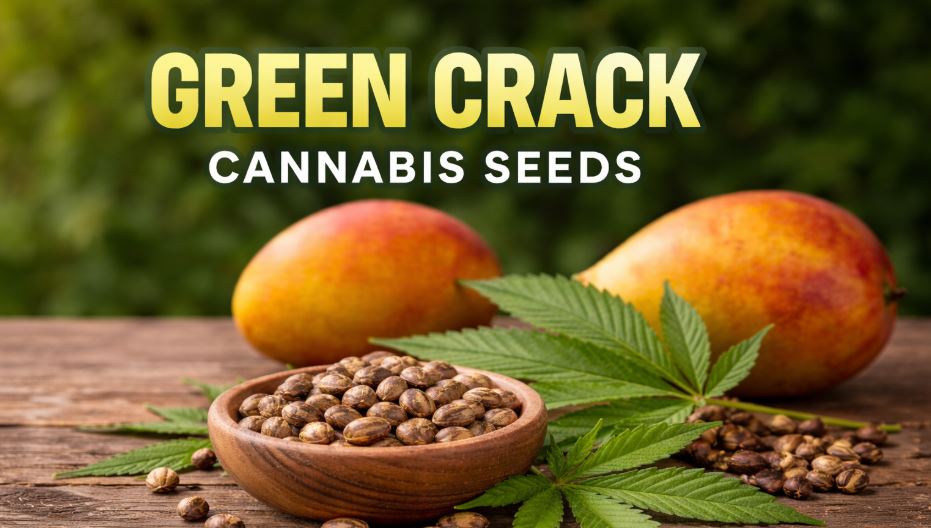
Green crack cannabis seeds: History, genetics, and top releases for collectors (2026)
Green Crack is one of those cannabis names that never really fades away.
First circulating in the 1990s and becoming widely recognised in the early 2000s, it’s a strain that helped define a generation of modern cannabis genetics. For collectors, Green Crack isn’t about novelty. It’s about understanding a key chapter in cannabis history.
Despite debates around its name and shifting presentation in modern catalogues, Green Crack remains one of the most widely reproduced and referenced sativa-leaning genetics in the world.
A note on the name
Green Crack wasn’t always called Green Crack.
Early versions were reportedly known simply as “Cush”, before the strain picked up its more provocative name through US cannabis culture. The renaming is often attributed to celebrity influence, though the story is largely anecdotal.
What matters today is that the name became globally recognised. In recent years, some breeders have chosen alternative names, but the underlying genetics remain the same — and instantly recognisable to collectors.
Genetic background
Green Crack is most commonly described as a cross between Skunk #1 and Afghani, placing it firmly in the lineage of late-20th-century breeding.
This heritage explains why Green Crack:
- Appears in countless seed catalogues
- Has been reworked, crossed, and renamed repeatedly
- Serves as a reference point for later sativa-leaning hybrids
Rather than a single definitive version, Green Crack exists as a family of interpretations, shaped by different breeders over time.
Notable green crack seed releases (collector overview)
 Seed City Seeds - Green Crack
A fusion of two award-winning sativas. Expect sharp citrus-skunk flavours and a rapid, focus-friendly energy boost.
Humboldt Seed Organisation - Green Crack
Often cited as one of the closest representations of the classic profile
Why green crack still matters
Green Crack’s continued presence isn’t about hype. It’s about influence.
For collectors, it represents:
- A bridge between old-school and modern breeding
- One of the earliest truly global “brand-name” strains
- A genetic reference used to understand how cannabis has evolved
Whether listed under its original name or a modern alternative, Green Crack remains a key strain for anyone interested in cannabis genetics as history, not trend.
Understanding its foundations
Green Crack isn’t rare. It isn’t limited. And that’s exactly why it matters.
Its widespread reproduction, reinterpretation, and occasional controversy make it one of the most useful strains for understanding how cannabis genetics move through time, markets, and cultures.
For collectors in 2026, Green Crack remains less about what’s new — and more about knowing the foundations.