

























No products in the basket.
Kush Strains Cannabis Seeds
Active filters
Breeders
Price
£ -
Seed Type
Stock Availability
Available As Single
Most Popular Seeds
On Sale
Flowering Period Type
Indica / Sativa
Cannabinoid Profile
Environment
Strength
Yield
Indoor Height
Experience Required
Hardiness
Strain Type
Medical Strains
Cup Winner
Indoor Flowering Time
Outdoor Harvest Time
Smell / Taste

Kush strains come from wild cannabis that grew for centuries in the Hindu Kush mountains, a rugged range running through Afghanistan, Pakistan, and northern India.
Freezing winters, baking sun, and thin mountain air shaped these plants into tough, resin-packed survivors with thick buds and bold scents.
In the sixties and seventies, travellers and adventurers brought seeds back to California and Europe, kicking off a breeding wave that gave us OG Kush, Bubba Kush, Master Kush, and dozens more.
Today, Kush seeds sit at the heart of cannabis collections worldwide, prized for their rich history and unmistakable character.
Read MoreWhere kush seeds come from
The story starts high in the Hindu Kush, where cannabis grew wild long before anyone thought to breed it.
For thousands of years, local communities used the plant, and nature did the rest, harsh weather, rocky soil, and altitude turned these groups into compact, resin-heavy survivors.
When Western travellers followed the Hippie Trail through Afghanistan and Pakistan in the seventies, they stumbled on these landraces and smuggled seeds home.
Afghan Kush genetics left the country just before the Soviet invasion in 1979, and those pre-war strains still appear in seed banks today.
California breeders got hold of the seeds and spent decades refining them, keeping the earthy punch and dense structure whilst crossing them with local lines.
The Hindu Kush is one of the few places cannabis grows naturally in the wild, and that raw, untamed background is what makes Kush seeds so special.
What kush strains smell and taste like
Earthy, piney, and pungent, with a kick of spice that lingers. Many Kush strains smell like damp forest floor mixed with black pepper and incense, and some throw in lemon zest, fuel, or fresh flowers.
OG Kush hits with lemon, pine, and petrol all at once, whilst Bubba Kush leans into chocolate and exotic sweetness with a fuel edge. The flavour follows the nose: woody, herbal, and spicy on the tongue, sometimes finishing sweet or hashish-rich from all that resin.
Myrcene is the terpene doing most of the heavy lifting, bringing musky, herbal depth, and pinene and beta-caryophyllene add the pine and pepper.
That bold, layered character is why collectors love Kush seeds, they're memorable, intense, and unmistakably themselves.
Famous kush strains and their crosses
OG Kush is the big name, the one that launched a thousand hybrids. It's thought to be a cross of Chemdawg, Lemon Thai, and Pakistani Kush, first grown in Florida in the early nineties before making its way to Los Angeles in 1996.
From there it became the backbone of West Coast cannabis, spawning legends like Girl Scout Cookies and Headband. Master Kush blends Hindu Kush with Skunk #1, delivering steady cannabinoid levels around 17% THC and 1% CBD.
Bubba Kush is probably an OG Kush phenotype mixed with genuine Afghan landrace, and it's seriously strong, around 29% THC and 70% indica.
Critical Kush pairs OG Kush with Critical Mass for heavy yields and 20%+ THC, and Power Kush mixes Afghani #1 with Skunk #1 for a balanced character.
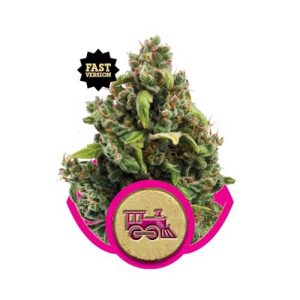
Breeders keep pushing the family forward, Candy Kush Express crosses Sweet Special with OG Kush, and Green Kush pairs Green Crack with Purple Kush, creating fast-flowering, high-potency seeds that still feel like proper Kush.
What kush looks like
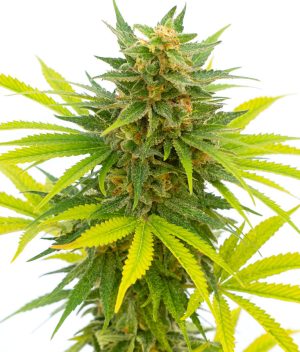
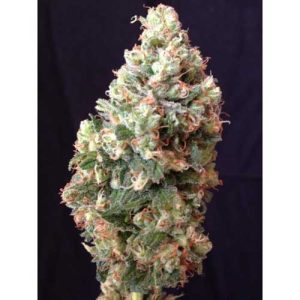
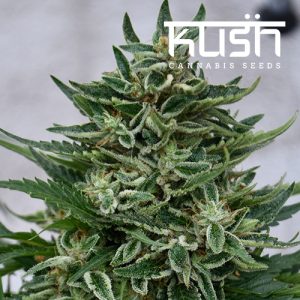
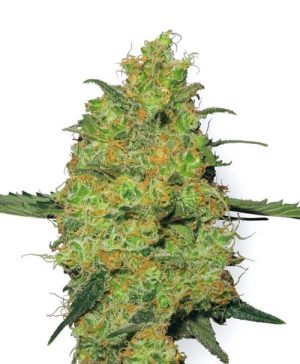
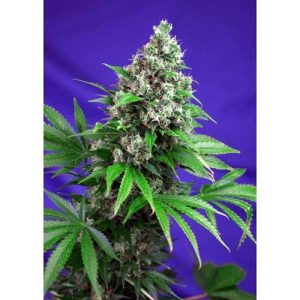
Kush seeds produce plants that lean indica, though some fifty-fifty hybrids and sativa-leaning phenotypes pop up. The plants stay medium height with tight node spacing, broad dark green leaves that sometimes show purple streaks, and dense, chunky buds coated in thick resin and trichomes.
THC often sits above 20%, with some strains pushing 25–29%, and CBD usually stays below 2%, though a few breeders aim for balanced ratios.
Seeds come as feminised, regular, and autoflowering, and many Kush varieties take their time flowering, building complex flavours and heavy resin over longer cycles.
Individual strains throw multiple phenotypes, OG Kush has four distinct expressions, three sativa-leaning and one more indica, and regional cuts like Tahoe OG, SFV OG, and Ghost OG represent different genetic snapshots within the broader family.
The word "Kush" has slipped into everyday slang as shorthand for cannabis generally, a sign of just how deep the family's cultural roots run.
Kush Strains Frequently Asked Questions
Kush refers to strains descended from wild cannabis in the Hindu Kush mountains. The word's also become slang for cannabis mostly, based on the family's distinctive smell and look.
They come from the Hindu Kush mountains in Afghanistan, Pakistan, and northern India, where wild cannabis adapted to extreme altitude and weather over thousands of years.
OG Kush, Bubba Kush, Master Kush, Purple Kush, and Hindu Kush are the big names. Kosher Kush, Khalifa Kush, Pink Kush, SFV OG, and Critical Kush are popular too.
Earthy, piney, and pungent, with hints of lemon, citrus, spice, or fuel. Flavours run from woody and herbal to sweet, spicy, and hashish-like, sometimes with fruity notes.
Myrcene, pinene, and beta-caryophyllene show up a lot, bringing musky, piney, and spicy aromas and flavours that define the Kush character.
Most Kush strains sit above 20% THC, with some hitting 25–29%. CBD usually stays below 2%, though some breeders aim for balanced ratios.
Mostly indica-dominant, with compact growth and dense buds. Some fifty-fifty hybrids exist, and a few phenotypes lean sativa in their structure and expression.
OG Kush is a cross of Chemdawg, Lemon Thai, and Pakistani Kush from early-nineties Florida. It became the foundation for West Coast cannabis and spawned famous hybrids like GSC.
In the UK, Kush cannabis seeds are legal to own and collect as adult souvenirs, valued for their heritage, bold aromas, and genetic diversity.
Kush strains stand out with dense, resinous buds, intense earthy-piney aromas, and landrace heritage from the Hindu Kush mountains, plus high THC and robust growth.