






















































No products in the basket.
What is an inbred cannabis strain
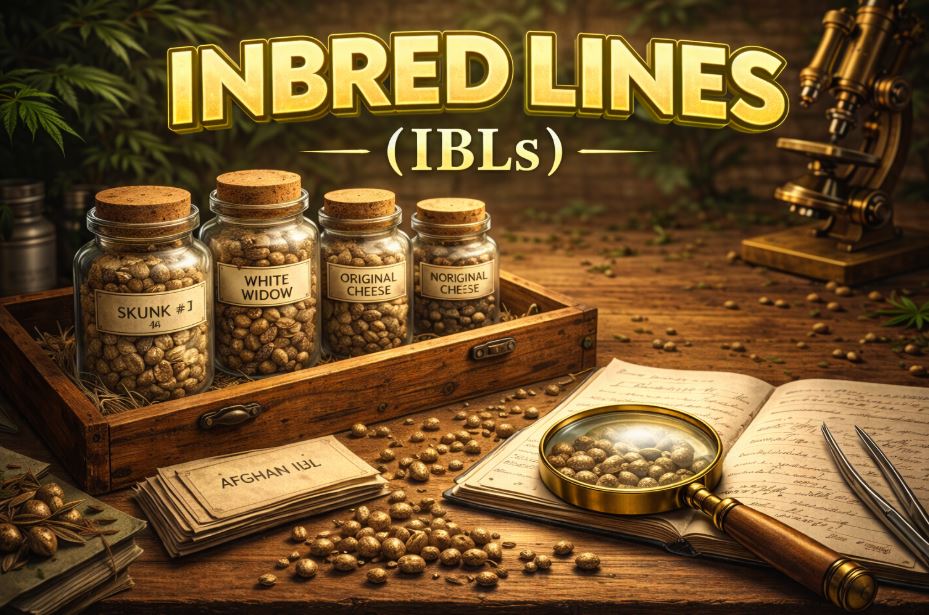
What is an inbred line (IBL) in cannabis genetics?
An Inbred Line (IBL) refers to a cannabis genetic line that has been deliberately stabilised through repeated, controlled breeding within a closely related genetic pool. Unlike hybrids, which emphasise variation and novelty, IBLs are designed to reduce genetic drift, reinforcing a narrow set of identifiable traits across generations.
By 2026, IBLs are no longer common catalogue launches. Instead, they are valued as genetic reference material, preserved for their historical importance, consistency, and role in shaping modern cannabis lineages.
For collectors, IBLs represent continuity rather than trend.
IBLs vs Landraces: A clear distinction
While landraces and IBLs are sometimes grouped together, they serve very different roles in genetic collections.
Landraces
- Originate from specific geographic regions
- Display wide natural variation
- Were never stabilised through formal breeding
- Serve as raw genetic sources
Inbred Lines (IBLs)
- Are deliberately stabilised by breeders
- Show reduced variation across generations
- Represent a fixed interpretation of a genetic type
- Act as reference points rather than evolving populations
In short, landraces are origins, while IBLs are definitions.
Why IBLs matter
Although modern seed catalogues are dominated by complex hybrids, IBLs remain essential to understanding cannabis genetics as a whole.
IBLs are valued because they:
- Preserve historically important genetics
- Provide naming stability across decades
- Act as benchmarks against which newer hybrids are measured
- Anchor genetic families that would otherwise fragment
Many contemporary strains trace their lineage back to IBLs, even if the original line is no longer widely grown or marketed.
Notable inbred lines with lasting collector relevance
The following IBLs are frequently cited in genetic archives and collector circles due to their historical impact and continued recognition:

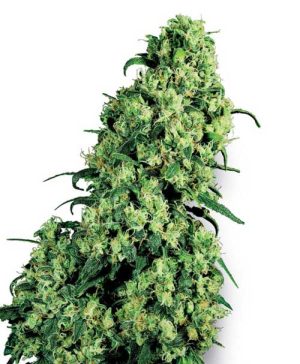
Skunk #1 (IBL)
One of the most influential stabilised lines in modern cannabis history, Skunk #1 is widely regarded as a foundational genetic used in countless later hybrids.

Original White Widow (IBL)
An early stabilised line that played a major role in European seed catalogues throughout the 1990s and early 2000s.

Afghan-derived IBLs
Several Afghan-based IBLs were created to preserve specific interpretations of older regional genetics, acting as controlled counterparts to broader landrace populations.
These lines are rarely introduced as “new” releases today, but they continue to underpin large portions of modern genetic history.
IBLs as the foundation of modern hybrids
Most well-known hybrid families did not emerge randomly. They were built by crossing stable parent lines, many of which were IBLs or near-IBLs at the time.
Examples include:
- Skunk-based hybrid families
- Kush-derived modern lines
- Cheese- and Widow-related genetics
Without stabilised parent material, these families would not have retained recognisable identities over time.
Why IBLs are less visible but more important
Most commercial attention is focused on:
- Short-run hybrids
- Crosses with layered lineage
- Frequent renaming and rebranding
IBLs do not fit this model. They change slowly, resist novelty, and offer little marketing flexibility. As a result, they are often maintained quietly rather than promoted loudly.
For collectors, this makes IBLs increasingly valuable as:
- Stable reference points
- Long-term genetic anchors
- Documentation of how modern genetics evolved
IBLs in a collector-focused collection
Collectors typically include IBLs to:
- Contextualise newer hybrids
- Preserve genetic milestones
- Maintain lineage clarity within a collection
- Avoid over-reliance on trend-driven releases
An IBL-heavy collection prioritises history and structure over novelty.